Mugola Serif Font for Handmade Brands & Printables
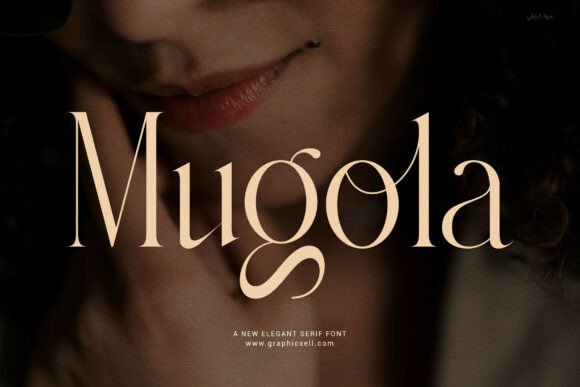
As a maker who designs printable wall art, sews boutique garment tags, and cuts vinyl for farmhouse signs, I’ve learned that the right serif font doesn’t just look pretty—it builds trust. Mugola is one of those rare display fonts that feels both elevated and approachable: clean lines, balanced letterforms, and quiet confidence in every capital “M” and graceful “g.” It’s not fussy or overly ornate—no distracting flourishes or fragile serifs that vanish at small sizes. Instead, Mugola delivers refined modernity with real-world usability.
I reach for Mugola when my project needs to say “thoughtfully made” before a single word is read. Its subtle contrast between thick and thin strokes gives it presence on physical products—whether heat-pressed onto linen tea towels or laser-cut into birch wood signs. Because it’s a well-drawn serif font, Mugola carries weight without heaviness. That means your candle label won’t look like a corporate brochure, and your wedding welcome board won’t feel cold or distant.
Where Mugola Shines in Your Physical & Digital Products
Mugola works best where clarity meets charm—and where your buyer’s eye lands first. Here’s how I use it across real projects:
- Candle and soap labels: At 10–12 pt on matte kraft sticker paper, Mugola remains crisp and legible—even with minimal ink coverage. Its open counters (like the center of “e” or “a”) prevent filling in during print or cut.
- Wedding stationery: I pair Mugola as the main typeface for names and dates on invitations, then layer a soft script font for “&” or “RSVP.” The contrast feels intentional, not chaotic—and Mugola holds up beautifully in foil-stamped or letterpress prints.
- SVG files for Cricut & Silhouette: Its consistent stroke width and generous spacing mean clean cuts at 1.5" tall. No overlapping letters, no tiny serifs that snag on vinyl weeding tools.
- Digital printables: Planner headers, quote posters, and seasonal bundle covers gain instant sophistication with Mugola. It reads clearly at thumbnail size on Etsy listings—critical when shoppers scroll fast.
- Boutique product tags: On cotton twine tags or recycled cardstock, Mugola’s elegance signals quality without shouting. Customers notice the difference between “handmade” and “handcrafted with care.”
Readability & Real-World Production Tips
Mugola isn’t built for body text—but that’s exactly why it excels as a display font. Use it for short phrases, titles, names, and decorative headings (think “Est. 2021,” “Hand-Poured,” or “Welcome Home”). Avoid setting full paragraphs in Mugola; its personality shines brightest when given breathing room.
For cutting machines: Always convert to outlines before saving SVGs. Check kerning manually between uppercase pairs like “TO” or “AV”—Mugola’s default spacing is tight but adjustable. On small stickers (under 1”), stick to all-caps or initial + last name formats (“E. Lee”) rather than full sentences.
When previewing mockups, view at 100% zoom—not “fit to screen.” Mugola’s subtlety can get lost in low-res previews, but it pops in person. I test-print a sample tag at actual size before ordering 500 units. Trust me: that extra 10 minutes saves reprints.
Smart Pairings for Balanced Design
Mugola plays beautifully with other typefaces—especially when you’re building cohesive brand assets. My go-to pairings:
- With a gentle script: Try Mugola for “The Wildflower Co.” and a relaxed handwritten font for “Botanical Soy Candles.” The serif grounds the whimsy.
- With a neutral sans serif: Use Mugola for headlines (“New Arrivals”) and a clean sans (like Montserrat or Inter) for descriptions. This combo works flawlessly on product packaging and digital shop banners.
- With another serif (for depth): Layer Mugola Bold for titles over a lighter serif like Lora or Merriweather for fine print—ideal for wedding programs or artisanal food labels.
Avoid pairing Mugola with ultra-thin fonts or highly decorative scripts. Its quiet confidence gets drowned out. Keep contrast purposeful, not competing.
Licensing, Formats & Practical Notes
Mugola is a premium font designed for commercial use—meaning you can confidently use it in client work, sell SVG files on Etsy, include it in Canva templates, or print it on mugs, tote bags, and greeting cards. Just verify your license includes extended commercial rights if you’re bundling it into editable design assets (like layered PSD templates). Most reputable sellers offer clear licensing terms—read them before downloading.
Check what’s included: Mugola typically ships in OTF and TTF formats (compatible with Cricut Design Space, Silhouette Studio, Adobe apps, and Canva), plus web-ready WOFF files if you also manage a Shopify store. Some versions include stylistic alternates (like a swash “Q” or connected “ct” ligature)—great for limited-edition holiday packaging or signature wedding suites.
No multilingual support is mentioned in the base description, so if your shop serves Spanish-, French-, or German-speaking customers, double-check glyph coverage before using Mugola for bilingual labels or tags.
At its core, Mugola isn’t about trend-chasing—it’s about consistency. When your candle label, Instagram story, and thank-you card all share the same thoughtful serif rhythm, customers begin to recognize your voice before they see your logo. That’s branding that sticks. And for makers who pour time into every stitch, cut, and print, Mugola is the kind of detail that quietly says, “I value this as much as you do.”